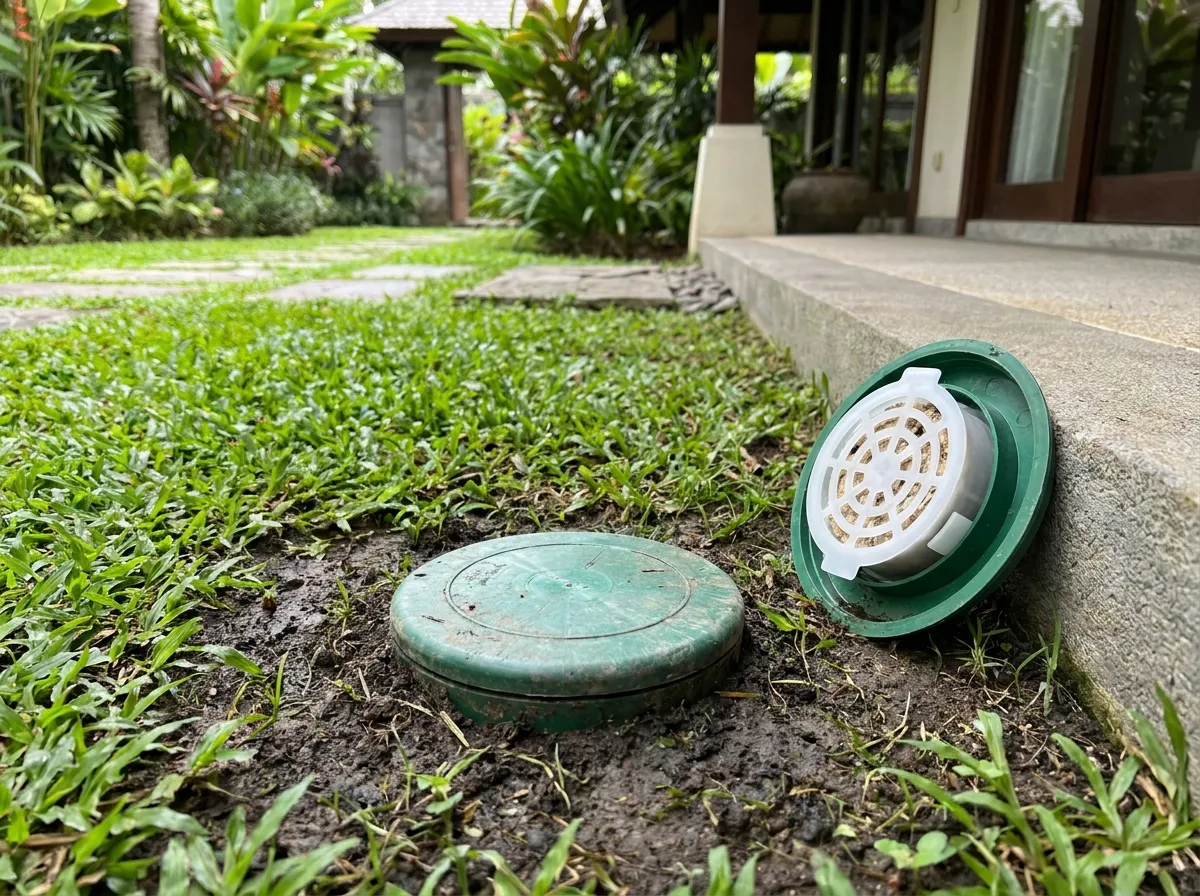
Bait station systems are the most effective long-term termite management approach for Bali properties that can't use liquid soil barriers — either because the construction configuration doesn't allow perimeter soil treatment, or because the property is adjacent to water features or sensitive plantings. Stations are installed in the ground around the property perimeter at 2–3 metre intervals. Termites find the bait, eat it, and carry it back to the colony. Colony elimination typically takes 4–12 weeks depending on colony size. Annual station maintenance monitors for new activity and replenishes bait.
Bait Station Program
Installation
Stations installed at perimeter and internal high-risk locations. Positioning based on property plan and known termite pressure areas. Installation takes 2–4 hours for a standard villa perimeter.
Monitoring & Maintenance
Quarterly or six-monthly inspection visits check each station for activity, replace consumed bait, and report on colony status. Annual maintenance contract includes all visits and bait replacement.
How Baiting Eliminates a Colony
A liquid barrier stops termites at a perimeter, but it doesn't kill the nest. Bait stations do. Foraging workers discover the bait, feed on a slow-acting active ingredient, and carry it back to share with the colony through the normal food-exchange behaviour that termites rely on. Because the effect is delayed, the workers keep transferring it before they die, and the whole colony — including the queen — collapses through this secondary kill. Elimination typically takes 4–12 weeks depending on colony size, which is slower than direct injection but reaches nests that a barrier never touches.
When Bait Stations Are the Right Choice
We recommend baiting where a perimeter soil barrier isn't practical: properties paved right up to the walls, complex split-level construction, or sites next to ponds, pools and sensitive plantings where minimising soil chemical is preferred. They also suit owners who want ongoing, documented colony management rather than a one-off treatment — popular with rental villas in Seminyak and Canggu where a written maintenance record reassures guests and managers. If you're not sure which approach fits, start with a termite inspection and we'll advise.
Why Ongoing Monitoring Matters in Bali
In a temperate climate a colony eliminated in autumn buys you a quiet winter. Bali offers no such pause. The same warm, humid soil that let the first colony thrive will support the next one, and new foraging pressure can arrive at a property at any time of year. That is exactly what makes an installed, monitored bait system so well suited to the island: rather than treating reactively after damage appears, the stations sit in the ground as an early-warning and rapid-response network. When a new colony starts foraging, it hits a station before it reaches your timber, and the next monitoring visit picks it up. For villa owners who are off-island for part of the year, this continuous coverage is the closest thing to set-and-forget termite protection available here.
Pricing
| Service | Guide Price (IDR) | Notes |
|---|---|---|
| Bait station installation (per station) | 150,000–250,000 | Includes first bait charge |
| Annual monitoring (per property) | 600,000–1,200,000/year | Two visits, bait replacement |
Guide ranges — see the full pricing page. Station count depends on perimeter length; we quote on WhatsApp.
FAQ
How long until the colony is gone?
Typically 4–12 weeks. Workers carry the bait back to the nest, so the whole colony collapses rather than just the foragers you can see.
How often are stations checked?
Quarterly or six-monthly. Each visit checks activity, replaces consumed bait and reports colony status; the annual contract covers all of it.
Are stations safe around pets?
Yes — stations are locked, in-ground units containing the bait. We position them clear of high-traffic pet areas where possible.