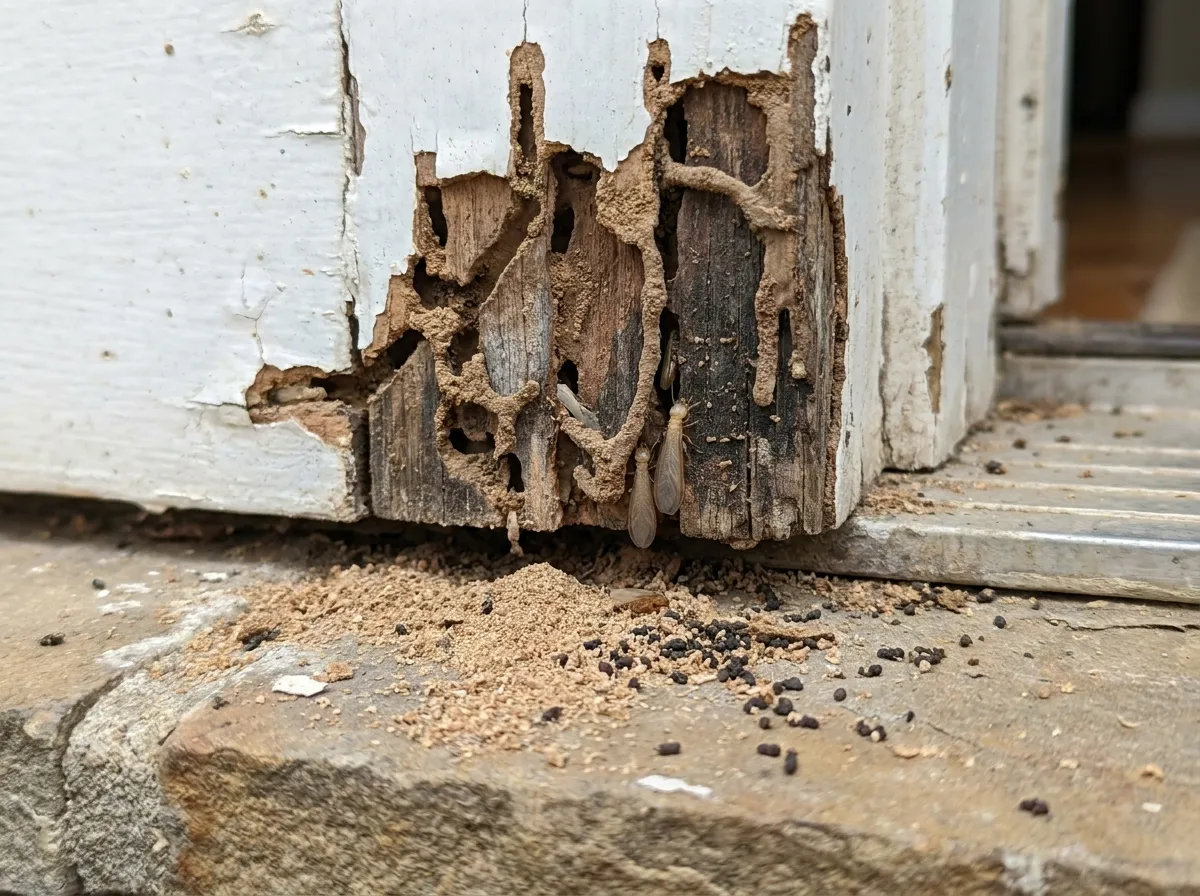
Once a Ubud villa owner showed me termite damage that three previous treatments had not resolved. Inspection revealed the problem: each treatment had been liquid termiticide applied to the existing perimeter soil barrier — refreshing a perimeter that had been breached rather than treating the active colony. The colony was entering through a point above the soil barrier — through a concrete path that touched the building wall — bypassing the termiticide entirely. Identifying the actual entry route before selecting treatment is not optional — it determines whether the treatment has any chance of working.
Treatment Options
Liquid Soil Barrier
Termiticide injected into the soil around the building perimeter creates a treated zone that subterranean termites cannot cross without contacting lethal chemical. Effective for preventing new colony establishment. For existing active infestations, it needs to be combined with colony elimination rather than barrier alone.
Direct Injection Treatment
Termiticide injected directly into active mud leads, infested timber voids and known colony areas. Kills the active infestation where it currently is rather than waiting for termites to contact a perimeter barrier. The most direct approach for established active infestations with identified colony locations.
Bait Station Systems
Stations placed in the ground around the property perimeter. Termites find the bait, consume it, carry it back to the colony, and the colony is eliminated through secondary kill. Slower than direct treatment (4–12 weeks for colony elimination) but reaches colonies that liquid treatment doesn't access.
Drywood Termite Fumigation
For severe drywood termite infestations throughout a timber structure, whole-structure fumigation with penetrant gas is the only treatment that reaches all active colonies in the building. Requires full evacuation and sealing of the structure. Available for severe cases where targeted injection is insufficient.
How We Approach an Active Infestation
Confirm and identify
Before anything else we run a termite inspection to confirm the infestation is active, identify whether it is subterranean or drywood, and — critically — find the entry route. As the Ubud case above shows, treating without knowing how termites get in usually fails.
Choose the right method
Subterranean colonies are eliminated with bait stations or stopped with a liquid soil barrier; localised active infestations are knocked out by direct injection; severe whole-structure drywood cases may need fumigation. We match the method to the colony, not the other way around.
Treat the colony and seal the route
We treat the active infestation and address the structural detail — a path touching the wall, a soil bridge, a gap above the barrier — that let the termites in, so the same route can't be reused.
Verify and protect
For bait programmes we monitor until the colony is confirmed dead. We then recommend an annual inspection so any new pressure is caught early — essential in Bali where colonies never go dormant.
Which Treatment Is Right?
| Method | Best for | Speed |
|---|---|---|
| Liquid soil barrier | Preventing new subterranean attack around a perimeter | Protects immediately |
| Direct injection | Known active infestation at identified points | Kills on contact |
| Bait stations | Whole-colony elimination, water-sensitive sites | 4–12 weeks |
| Fumigation | Severe drywood termites throughout a structure | Single treatment, full evacuation |
Treatment Pricing
| Service | Guide Price (IDR) | Notes |
|---|---|---|
| Liquid soil barrier (per m perimeter) | 35,000–55,000 | Standard villa perimeter |
| Direct injection treatment | 400,000–900,000 | Per infestation point |
| Bait station installation (per station) | 150,000–250,000 | Includes first bait charge |
Guide ranges only — see the full pricing page. Every job is quoted on WhatsApp before work begins.
FAQ
How long does treatment take to work?
Direct injection kills on contact; bait stations eliminate a colony over 4–12 weeks; a liquid barrier protects from new attack immediately.
Will the termites come back?
Correctly targeted treatment plus a barrier or ongoing bait monitoring prevents re-infestation. We recommend an annual inspection afterwards because Bali colonies stay active year-round.
Is it safe for my household?
The termiticides are registered for residential use in Indonesia and applied into soil and timber voids, not living surfaces. We advise on safe access timing.
Active Termite Problem?
Tell us what you're seeing — mud leads, hollow-sounding timber, swarmers (flying termites), frass deposits. We'll advise the correct treatment approach before visiting.
WhatsApp for Treatment